

Need
help?Call 1-833-423-3367We answer
Saint John
Heavy industry support for the port city. We answer.
Full service, one team
Design, panels, code, install and support, delivered locally.
What runs in Saint John
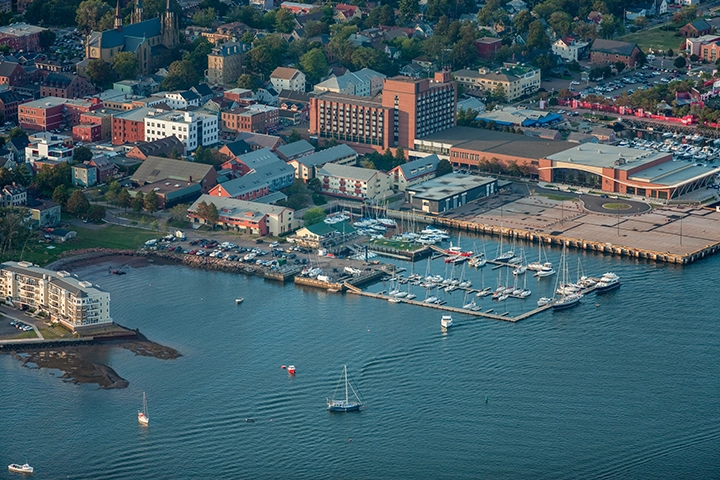
Saint John is the heaviest process-industry city in the Maritimes. Refining and petrochemical operations, pulp and paper, a deepwater port with container and bulk terminals, power generation including the Point Lepreau station down the coast, brewing, and the fabrication and marine trades that grew up around all of it. This is continuous-process country, where a plant does not stop for a convenient reason.
Controls work in that setting has a different centre of gravity. Less packaged machinery, more process loops, motor control centres, instrumentation and installations that carry serious consequences if they are done carelessly.
- Process and heavy industry. Motor control centres, VFD and drive systems, process loop control, instrumentation wiring.
- Pulp, paper and wood products. Drive and conveyor controls, dust-rated enclosures, legacy PLC migrations on lines that cannot stop.
- Port and bulk terminals. Conveyor and material handling controls, scale and gate systems, outdoor-rated panels.
- Power and utilities. Switching and distribution work, pump and station controls, telemetry and SCADA.
- Food, beverage and packaging. Batching, filling and packaging line controls, washdown-rated panels.
Where downtime is measured in tonnes
In a continuous plant, the cost of a stop is not an hour of labour. It is the product that did not get made, the batch that has to be scrapped, and the restart sequence that takes longer than the fault did. That changes how a controls job should be planned.
So the sequencing is deliberate. The current program is uploaded and archived before anything is touched. Changes are staged offline in a copy, never in the live file. Online edits are used only for low-risk changes and never for safety interlocks or core sequencing. Cutover happens in a planned stop with the last known good program loaded and ready. If it looks wrong at cutover, it rolls straight back.
Bedford brings the full scope to Saint John: PLC, HMI and SCADA programming and legacy migrations, industrial electrical installation by Red Seal electricians, custom control panels built and bench-tested in our shop, robotics integration, and emergency response through Lifeline.
Working in Saint John
We have people across southern New Brunswick, so Saint John is routine work rather than a special trip. For planned work that means crews arrive at the start of your window rather than partway through it, and a panel that needs a change can go back to the shop and return the same week.
Larger plants usually want the shop visit first. Panels are built and exercised on the bench in Dieppe before they travel, and you are welcome to see yours while it is being wired.
When something stops, call 1-833-423-3367. Someone available answers, takes the details and gets the right people on it.
Common questions in Saint John
 Halifax
 Moncton
 Fredericton
 Truro
Truro Amherst
 Charlottetown
 Summerside
Bring us your
Saint John project
Book a free consultation. We tell you straight whether we can help.